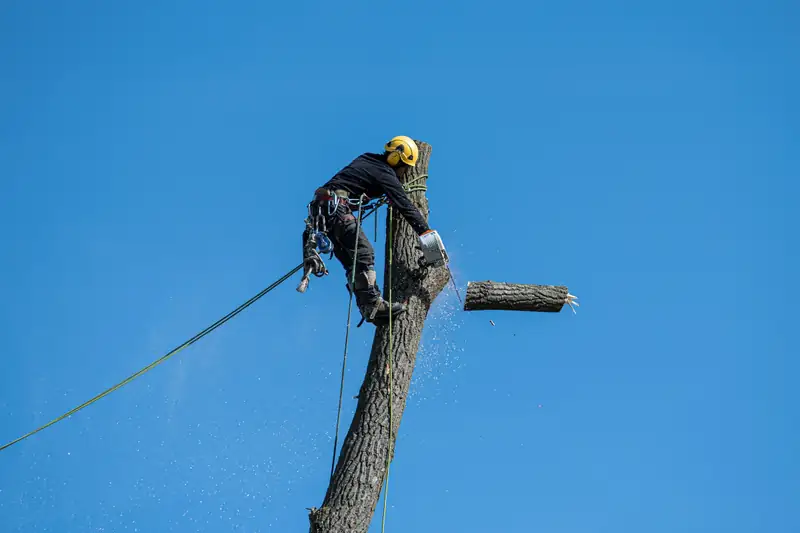
Tree Removal in Gainesville, FL
Taking a tree down starts with reading it: species, lean, rot, and what sits underneath. Then the saw comes out and the job gets finished.
Signs a tree has to come down
Some trees only look bad. Others are failing from the inside: a trunk that sounds hollow, mushrooms or conks at the base, a lean that has changed, or roots lifting the soil on one side. With a roof or driveway underneath, any of these can tip a tree toward removal.
- Dead top or large dead limbs over a roof or drive
- A split or cracked trunk, or a deep cavity
- Fungus at the base or on the main roots
- A tree that died or lost its leaves out of season
How the job runs
- Study the tree, its lean, its roots, and everything beneath it.
- Plan the drop zone and the cut order before the saw starts.
- Take the tree down in pieces or in one, as the lot allows.
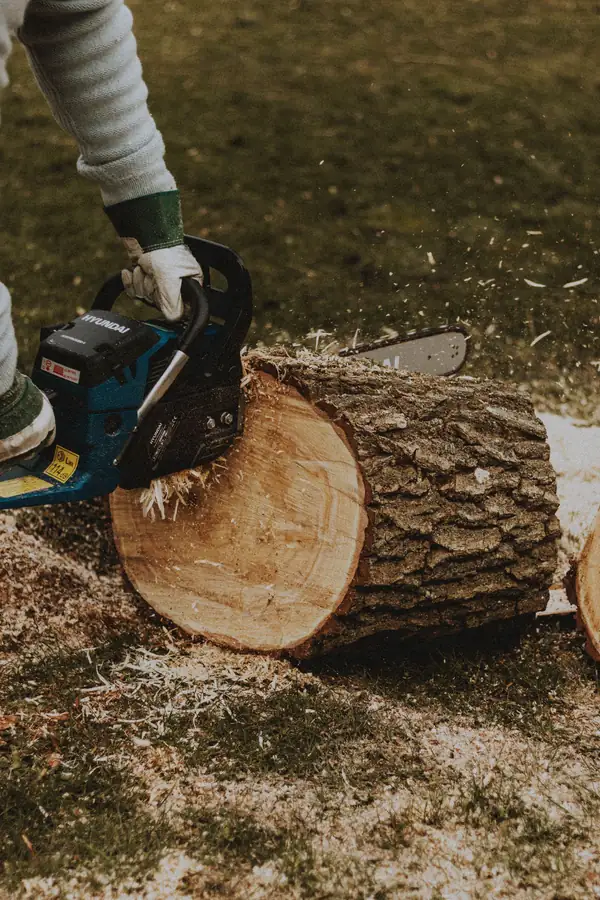
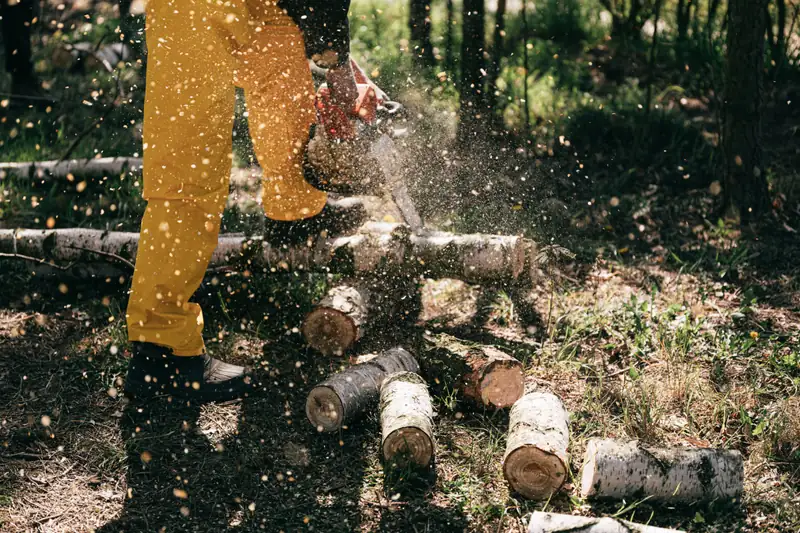
- Cut the wood and brush down to size and sort what stays and what goes.
- Clear the work area and walk it with you before we go.
A removal day, in order
The name is the plan: know the tree first, then do the work. Before cutting, we check the drop zone, meaning where the tree wants to lean, what sits underneath, and where a falling piece could land.
On a tight lot the tree comes down in pieces: the top first, then limbs, then the trunk, each piece controlled so nothing lands on the shed or the sprinkler heads. A tree in or against a power line is a call to the utility first.
Gainesville trees and the permit question
Around Gainesville, laurel and water oaks are the common problem trees. UF/IFAS gives laurel oak a 50 to 70 year life span, with decay and root rot that hollow it, and water oak is short-lived and decay-prone.
In the city, a permit is only required for Heritage Trees on an existing single-family lot: 20 inches in trunk diameter for most species, 30 inches for water oak, laurel oak, sweetgum, slash pine, and loblolly pine. Permits are free but must be in hand before work. Other towns and unincorporated Alachua County have their own rules.
Tree Removal around Gainesville
We take tree removal calls across the city and the towns within about half an hour of our north Gainesville base.
Tree Removal questions
Do I need a permit to remove a tree in Gainesville?
Often not. Inside the city, existing single-family lots regulate only Heritage Trees, and invasive species are exempt. If a qualified professional named in the statute, such as a credentialed arborist, documents a residential tree as an unacceptable risk, Florida Statute 163.045 bars a local permit for it.
How do you decide between trimming and removing?
A sound tree that crowds a fence or roofline can often be trimmed back, and when pruning solves the problem we say so. Hollow trunks, root rot, and large dead sections point toward removal. Mature shade takes decades to replace.
Can the stump be taken care of at the same time?
Cutting leaves a stump near ground level. Grinding is a separate step that can be planned with the removal, so the chips and any replanting are settled early.
Want a second look at a tree?
Call and describe it. Most questions take two minutes on the phone.